APEX CAMPUS · BLOG & INSIGHTS
Learn with clarity. Prepare with purpose.
Practical articles on Japanese learning, examinations, study pathways and everyday preparation for Japan.
Campus Life & Student Experience
JLPT vs JFT-Basic: Which Japanese Exam Should You Take?
By APEX Campus · November 2, 2026
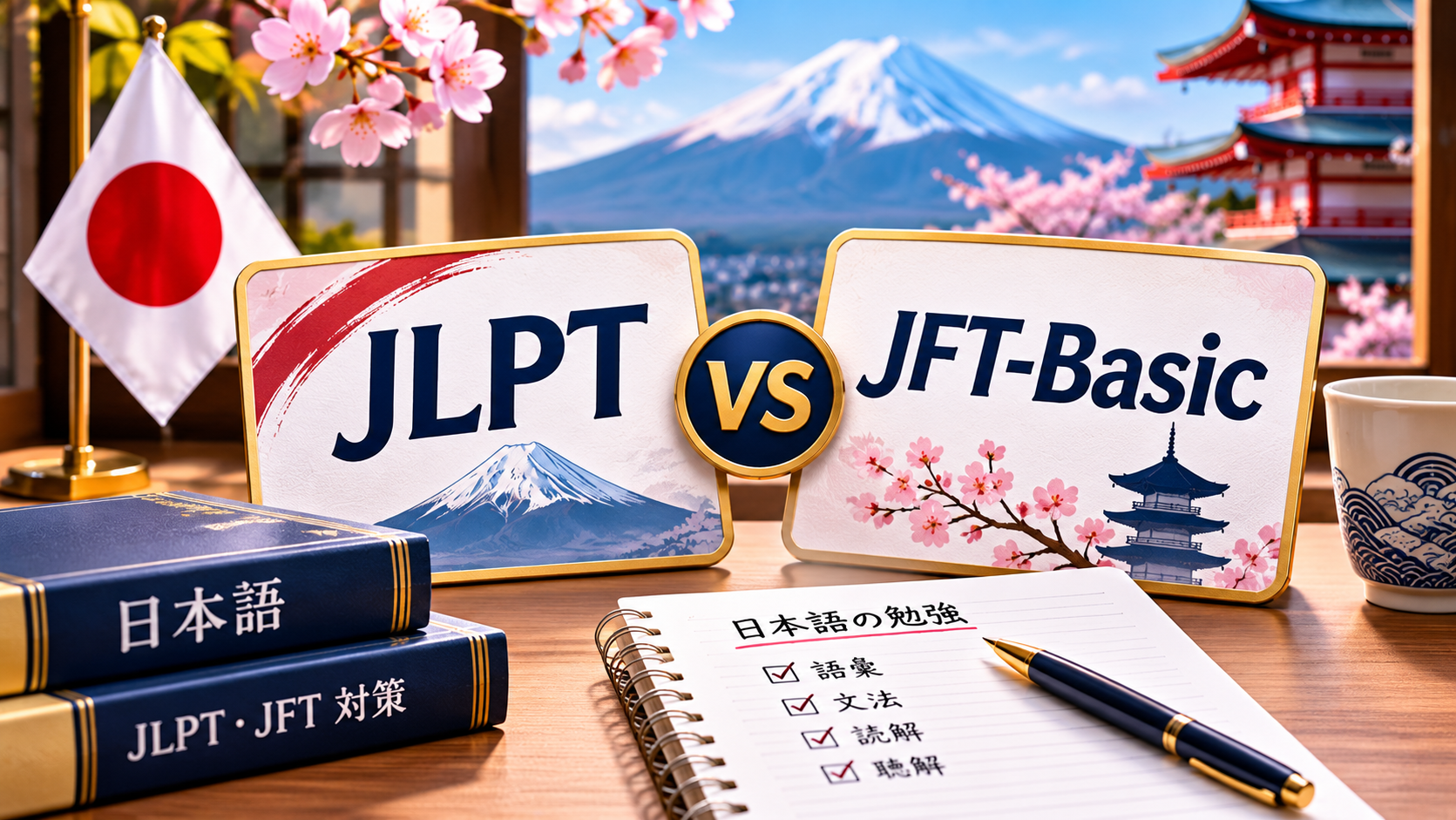
Introduction: Choosing the Right Japanese Language ExaminationAre you learning Japanese with the dream of studying, working, or building a successful future in Japan?One of the most important decisions in your Japanese language journey is choosing the right proficiency examination.For students in Sri Lanka, two commonly considered examinations are the Japanese-Language Proficiency Test (JLPT) and the Japan Foundation Test for Basic Japanese (JFT-Basic).Although both assess Japanese language proficiency, they serve different purposes and use different assessment systems.Understanding these differences can help you choose the examination that best supports your future goals.What Is the JLPT?The Japanese-Language Proficiency Test (JLPT) is an internationally recognized examination designed to evaluate Japanese language proficiency among non-native speakers.The JLPT has five levels:N5: Basic Japanese language understandingN4: Understanding fundamental Japanese used in familiar situationsN3: Understanding Japanese used in everyday situations to a certain degreeN2: Understanding Japanese in a wider range of everyday and professional situationsN1: Advanced Japanese language comprehensionN5 is the introductory level, while N1 is the most advanced.The examination evaluates vocabulary, grammar, reading, and listening comprehension.JLPT qualifications may be useful for academic applications, employment requirements, and demonstrating Japanese language ability.However, individual schools and employers determine which proficiency levels they accept.What Is the JFT-Basic?The Japan Foundation Test for Basic Japanese (JFT-Basic) assesses the Japanese communication skills needed in everyday life in Japan.It is particularly relevant to foreign nationals preparing to live and work in Japan, including applicants considering the Specified Skilled Worker (SSW) pathway.The examination focuses on practical communication through four sections:Script and VocabularyConversation and ExpressionListening ComprehensionReading ComprehensionUnlike the JLPT's five-level structure, JFT-Basic assesses foundational proficiency using the A1, A2.1, and A2.2 (A2) classifications.Since August 2026, the examination has reported these three levels. A score of 200–250 corresponds to A2.2 (A2), the level relevant to the usual SSW language requirement.JLPT vs JFT-Basic: Key DifferencesFeatureJLPTJFT-BasicMain focusGeneral Japanese proficiencyPractical everyday communicationLevelsN5 to N1A1, A2.1, A2.2 (A2)Examination formatPaper-basedComputer-basedSkills assessedVocabulary, grammar, reading, listeningScript, vocabulary, conversation expressions, listening, readingTest opportunitiesGenerally twice yearlyMultiple test periods, depending on locationResultsReleased after the examination periodPreliminary results immediately; official results generally within 5 business daysCommon purposeAcademic, professional, and general language certificationEveryday communication and certain work-related pathwaysBoth examinations are valuable, but the best choice depends on your personal objectives.Which Examination Is Better for Working in Japan?If your goal is to work in Japan through the Specified Skilled Worker (SSW) programme, JFT-Basic may be a suitable option.For many SSW Category 1 applications, applicants can demonstrate the required Japanese proficiency through either:JLPT N4 or aboveJFT-Basic at the accepted A2 levelApplicants generally also need to meet the relevant occupational skills examination requirements and other immigration conditions. Some sectors have additional or different language requirements.Therefore, passing a language examination alone does not guarantee employment or a visa.Which Examination Is Better for Studying in Japan?Students planning to continue their education in Japan may benefit from pursuing JLPT qualifications.JLPT N5 and N4 can provide useful milestones during early language learning, while higher levels may be required for certain academic programmes.However, admission requirements vary significantly between Japanese language schools, vocational institutions, and universities.Some institutions accept other forms of evidence of Japanese language study or proficiency.Before selecting an examination, students should check the requirements of their intended institution.Is JFT-Basic Easier Than JLPT?This is one of the most common questions among Japanese language learners.The answer depends on your strengths and preparation.JFT-Basic emphasizes practical language use in everyday situations, while JLPT assesses Japanese proficiency through a broader level-based structure.A student who is comfortable with practical conversations may prefer the JFT-Basic format. Another student who enjoys structured vocabulary, grammar, and reading study may prefer JLPT.Neither examination should be considered automatically easier for every student.Regular practice, strong fundamentals, and familiarity with the examination format are essential for success.How Can You Prepare for These Examinations?Successful preparation begins with a strong Japanese language foundation.Students should focus on:Learning Hiragana, Katakana, and essential KanjiBuilding everyday Japanese vocabularyUnderstanding basic grammar patternsDeveloping listening comprehensionPractising reading exercisesImproving conversational confidenceCompleting timed mock examinationsA structured learning programme can help students identify weaknesses and improve their examination readiness.Prepare for JLPT and JFT-Basic at APEX CampusAt APEX Campus, Ahangama, we understand that every student has different goals.Some students begin Japanese language education with plans to study in Japan, while others hope to explore employment opportunities.Our Japanese language programmes include foundation courses, JLPT N5 and N4 preparation, dedicated JFT-Basic preparation, and examination practice.We aim to help students develop essential language skills, understand examination requirements, and prepare confidently for their next steps.Final Thoughts: Your Goal Determines Your ExaminationThere is no single Japanese examination that is best for everyone.If you are planning to study in Japan, investigate the language requirements of your preferred educational institution.If you are considering the SSW employment pathway, determine which Japanese language qualification is accepted for your intended occupation.Most importantly, remember that an examination certificate is only one part of your journey.Strong Japanese language skills, consistent practice, and proper preparation can open the door to greater opportunities.Start Your Japanese Language Journey TodayWhether you are preparing for JLPT or JFT-Basic, APEX Campus is ready to support your learning journey.APEX CAMPUSPanchaliya Junction, Ahangama, Galle, Sri LankaLearn Japanese. Build Confidence. Prepare for Your Future.Contact APEX Campus to learn more about our Japanese language courses, examination preparation programmes, and upcoming student intakes.
Want to discuss your next step?
Contact APEX Campus →