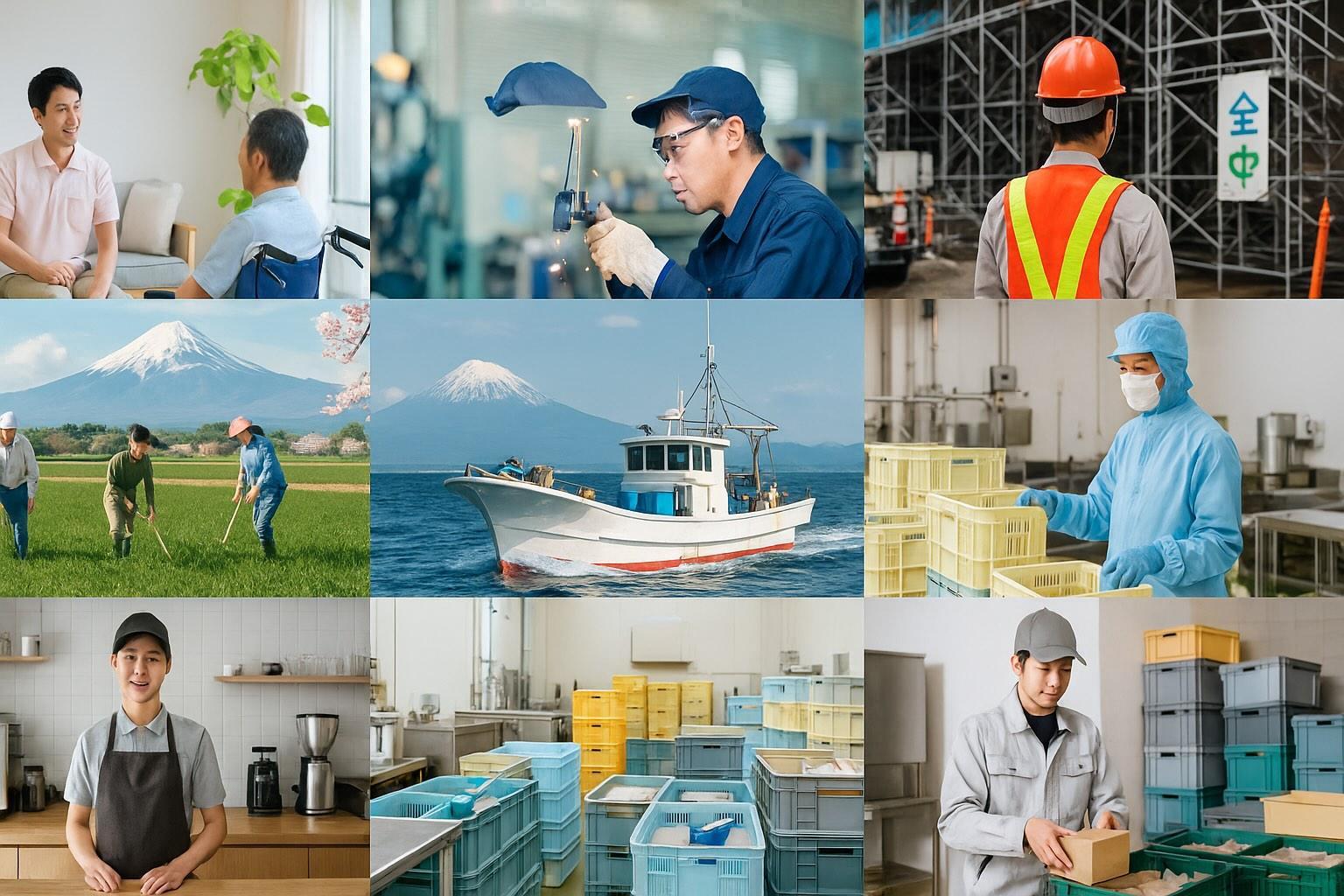
SSW Job Categories in Japan: A Complete Guide for Sri Lankan Applicants 🇯🇵<p><em>Discover the industries, required qualifications, and career pathways available through Japan's Specified Skilled Worker programme.</em></p><p><strong>Category:</strong> Japan Employment & Career Opportunities<br><strong>Updated:</strong> November 2026</p><h2>🌸 Introduction: Discover Employment Opportunities in Japan</h2><p><strong>Are you dreaming of working in Japan and developing your professional career in an international environment?</strong></p><p>Japan offers employment pathways for eligible foreign nationals through the <strong>Specified Skilled Worker (SSW)</strong> programme, known in Japanese as <em>Tokutei Ginou (特定技能)</em>.</p><p>Introduced in April 2019, this programme was designed to address labour shortages in designated Japanese industries by allowing qualified foreign workers to undertake specified jobs.</p><p>For Sri Lankan applicants, the SSW pathway can provide opportunities to use professional skills, develop Japanese language abilities, and gain international work experience.</p><p>However, applicants must meet the relevant language, occupational, employment, and immigration requirements.</p><p><strong>Understanding the available job categories is an important first step toward choosing the right career pathway.</strong></p><h2>🇯🇵 What Is the Specified Skilled Worker (SSW) Programme?</h2><p>The SSW programme is a Japanese residence-status system that allows eligible foreign nationals to work in designated industries.</p><p>There are two main categories.</p><h3>Specified Skilled Worker (i) — 特定技能1号</h3><p>SSW (i) is intended for workers who possess the required skills and Japanese language ability for eligible occupations.</p><p><strong>Key features include:</strong></p><ul><li><p>A total residence period of up to five years under SSW (i), in principle.</p></li><li><p>Japanese language and occupational skill requirements.</p></li><li><p>Employment with an eligible Japanese organization.</p></li><li><p>Support provided through the employer or an authorized support organization.</p></li><li><p>Accompanying family members are generally not permitted under this status.</p></li></ul><h3>Specified Skilled Worker (ii) — 特定技能2号</h3><p>SSW (ii) is intended for workers with more advanced occupational skills and experience in eligible industries.</p><p><strong>Key features include:</strong></p><ul><li><p>No overall five-year residence limit, subject to successful renewals.</p></li><li><p>More advanced occupational skill requirements.</p></li><li><p>The possibility of bringing eligible spouses and children to Japan.</p></li><li><p>Opportunities for longer-term career development.</p></li></ul><p><em>Not every SSW (i) industry has an SSW (ii) pathway.</em></p><h2>🏢 The 19 SSW Job Categories in Japan</h2><p>As of November 2026, Japan's official SSW programme identifies <strong>19 industrial fields under SSW (i)</strong>.</p><p>These categories cover healthcare-related support, hospitality, manufacturing, transportation, agriculture, construction, and other essential industries.</p><h3>1. Nursing Care — 介護 (Kaigo)</h3><p><underline>Industry:</underline> Caregiving and personal assistance</p><p>Nursing care workers support elderly people and individuals who need assistance with everyday activities.</p><p><strong>Typical responsibilities:</strong></p><ul><li><p>Assisting with meals and personal hygiene.</p></li><li><p>Supporting mobility and daily activities.</p></li><li><p>Helping with recreational activities.</p></li><li><p>Communicating with care recipients and staff.</p></li></ul><p><strong>Important:</strong> Applicants generally need an additional nursing care Japanese language evaluation test alongside the applicable general language and skills requirements.</p><h3>2. Building Cleaning Management — ビルクリーニング</h3><p><underline>Industry:</underline> Commercial building maintenance</p><p>Workers maintain cleanliness and hygiene in eligible buildings and facilities.</p><p><strong>Typical responsibilities:</strong></p><ul><li><p>Cleaning floors and common areas.</p></li><li><p>Maintaining sanitary facilities.</p></li><li><p>Using professional cleaning equipment.</p></li><li><p>Following workplace hygiene procedures.</p></li></ul><h3>3. Industrial Product Manufacturing — 工業製品製造業</h3><p><underline>Industry:</underline> Factory and industrial production</p><p>This field involves manufacturing industrial components and products.</p><p><strong>Typical responsibilities:</strong></p><ul><li><p>Operating manufacturing machinery.</p></li><li><p>Processing and assembling components.</p></li><li><p>Inspecting products.</p></li><li><p>Following workplace safety and quality standards.</p></li></ul><h3>4. Construction — 建設 (Kensetsu)</h3><p><underline>Industry:</underline> Construction and infrastructure</p><p>Construction workers participate in eligible building, civil engineering, and infrastructure projects.</p><p><strong>Typical responsibilities:</strong></p><ul><li><p>Construction and installation work.</p></li><li><p>Infrastructure maintenance.</p></li><li><p>Working with construction materials.</p></li><li><p>Following technical instructions and safety procedures.</p></li></ul><h3>5. Shipbuilding and Ship Machinery — 造船・舶用工業</h3><p><underline>Industry:</underline> Shipbuilding and marine engineering</p><p>This field involves the construction, maintenance, and manufacturing of ships and marine-related equipment.</p><p><strong>Typical responsibilities:</strong></p><ul><li><p>Welding and metal processing.</p></li><li><p>Ship component assembly.</p></li><li><p>Machinery installation.</p></li><li><p>Equipment maintenance and inspection.</p></li></ul><h3>6. Automobile Repair and Maintenance — 自動車整備</h3><p><underline>Industry:</underline> Automotive servicing</p><p>Workers inspect, service, and maintain motor vehicles.</p><p><strong>Typical responsibilities:</strong></p><ul><li><p>Vehicle inspection.</p></li><li><p>Engine and mechanical maintenance.</p></li><li><p>Identifying mechanical problems.</p></li><li><p>Repairing and replacing eligible components.</p></li></ul><h3>7. Aviation — 航空 (Koukuu)</h3><p><underline>Industry:</underline> Airport and aviation operations</p><p>This field covers specified aviation ground-handling and aircraft maintenance activities.</p><p><strong>Typical responsibilities:</strong></p><ul><li><p>Handling airport baggage and cargo.</p></li><li><p>Supporting aircraft ground operations.</p></li><li><p>Assisting with aircraft maintenance.</p></li><li><p>Following aviation safety requirements.</p></li></ul><h3>8. Accommodation — 宿泊 (Shukuhaku)</h3><p><underline>Industry:</underline> Hotels and hospitality</p><p>Accommodation workers provide services to hotel guests and support hotel operations.</p><p><strong>Typical responsibilities:</strong></p><ul><li><p>Reception and guest assistance.</p></li><li><p>Hotel service operations.</p></li><li><p>Guest communication.</p></li><li><p>Supporting hospitality activities.</p></li></ul><p><em>Good Japanese communication and customer-service skills are particularly valuable in this field.</em></p><h3>9. Automobile Transportation — 自動車運送業</h3><p><underline>Industry:</underline> Commercial transportation</p><p>This field includes eligible professional driving roles.</p><p><strong>Examples:</strong></p><ul><li><p>Truck drivers.</p></li><li><p>Taxi drivers.</p></li><li><p>Bus drivers.</p></li></ul><p>Applicants must satisfy the applicable Japanese driving licence, skills, language, and other occupational requirements.</p><p><strong>Some driving roles require a higher Japanese proficiency level than the general SSW minimum.</strong></p><h3>10. Railway — 鉄道 (Tetsudou)</h3><p><underline>Industry:</underline> Railway operations and maintenance</p><p>Railway workers support specified railway services and infrastructure.</p><p><strong>Typical responsibilities:</strong></p><ul><li><p>Track construction and maintenance.</p></li><li><p>Railway electrical equipment work.</p></li><li><p>Train maintenance.</p></li><li><p>Eligible railway operations.</p></li></ul><p>Specific duties and qualifications depend on the occupational category.</p><h3>11. Agriculture — 農業 (Nougyou)</h3><p><underline>Industry:</underline> Crop production and livestock farming</p><p>Agriculture is an important field for applicants interested in farming and food production.</p><p><strong>Typical responsibilities:</strong></p><ul><li><p>Planting and harvesting crops.</p></li><li><p>Maintaining agricultural fields.</p></li><li><p>Sorting and preparing agricultural products.</p></li><li><p>Supporting livestock operations.</p></li></ul><h3>12. Fishery and Aquaculture — 漁業 (Gyogyou)</h3><p><underline>Industry:</underline> Fishing and aquatic farming</p><p>Workers participate in eligible fishing and aquaculture activities.</p><p><strong>Typical responsibilities:</strong></p><ul><li><p>Fishing operations.</p></li><li><p>Handling fishing equipment.</p></li><li><p>Aquaculture maintenance.</p></li><li><p>Sorting and processing harvested aquatic products within permitted duties.</p></li></ul><h3>13. Food and Beverage Manufacturing — 飲食料品製造業</h3><p><underline>Industry:</underline> Food production and processing</p><p>This field involves manufacturing food and beverage products in eligible facilities.</p><p><strong>Typical responsibilities:</strong></p><ul><li><p>Food preparation and processing.</p></li><li><p>Packaging food products.</p></li><li><p>Operating production equipment.</p></li><li><p>Maintaining hygiene and quality standards.</p></li></ul><h3>14. Food Service — 外食業 (Gaishokugyou)</h3><p><underline>Industry:</underline> Restaurants and food service establishments</p><p>This category covers eligible restaurant and food service operations.</p><p><strong>Typical responsibilities:</strong></p><ul><li><p>Preparing and serving food.</p></li><li><p>Assisting customers.</p></li><li><p>Managing dining areas.</p></li><li><p>Following food hygiene procedures.</p></li></ul><p><strong>Important November 2026 update:</strong> Japan's official SSW website currently states that new SSW (i) applications in the food service field are not being accepted. Applicants should verify the latest position before making plans or paying application-related fees.</p><h3>15. Forestry — 林業 (Ringyou)</h3><p><underline>Industry:</underline> Forest management</p><p>Forestry workers undertake eligible forest maintenance and management activities.</p><p><strong>Typical responsibilities:</strong></p><ul><li><p>Tree planting.</p></li><li><p>Forest maintenance.</p></li><li><p>Supporting timber-related forestry operations.</p></li><li><p>Following environmental and occupational safety procedures.</p></li></ul><h3>16. Wood Industry — 木材産業</h3><p><underline>Industry:</underline> Timber and wood processing</p><p>This category involves the production and processing of timber products.</p><p><strong>Typical responsibilities:</strong></p><ul><li><p>Processing lumber.</p></li><li><p>Operating woodworking machinery.</p></li><li><p>Preparing timber materials.</p></li><li><p>Maintaining production quality and safety.</p></li></ul><h3>17. Resource Recycling — 資源循環</h3><p><underline>Industry:</underline> Recycling and waste-resource processing</p><p>This newly added field covers eligible activities related to waste treatment and resource recycling.</p><p><strong>Potential responsibilities include:</strong></p><ul><li><p>Sorting recyclable materials.</p></li><li><p>Operating processing equipment.</p></li><li><p>Supporting recycling operations.</p></li><li><p>Following environmental and safety standards.</p></li></ul><h3>18. Linen Services — リネンサプライ</h3><p><underline>Industry:</underline> Commercial laundry and linen supply</p><p>This field involves the handling and cleaning of linens supplied to businesses such as hotels and hospitals.</p><p><strong>Potential responsibilities include:</strong></p><ul><li><p>Collecting and sorting linens.</p></li><li><p>Operating commercial laundry equipment.</p></li><li><p>Inspecting cleaned products.</p></li><li><p>Preparing linens for distribution.</p></li></ul><h3>19. Logistics Warehousing — 物流倉庫</h3><p><underline>Industry:</underline> Warehousing and distribution</p><p>This newly added field covers eligible warehouse operations.</p><p><strong>Potential responsibilities include:</strong></p><ul><li><p>Receiving goods.</p></li><li><p>Sorting and storing inventory.</p></li><li><p>Preparing orders for shipment.</p></li><li><p>Supporting warehouse logistics.</p></li></ul><p><strong>Note:</strong> Resource Recycling, Linen Services, and Logistics Warehousing were added to the SSW framework in 2026. Their examination arrangements and worker-acceptance implementation must be confirmed individually before applying.</p><h2>📋 What Qualifications Do You Need for SSW Jobs?</h2><p>Applicants generally need to meet three main requirements.</p><h3>1. Japanese Language Proficiency</h3><p>For many SSW (i) occupations, applicants must demonstrate Japanese language proficiency through one of the accepted examinations:</p><ul><li><p><strong>JLPT N4 or above</strong></p></li><li><p><strong>JFT-Basic at the required A2 level</strong></p></li></ul><p>Some sectors have additional language requirements.</p><p>For example, nursing care generally requires a separate Japanese-language assessment, while certain transportation positions require higher proficiency.</p><h3>2. Occupational Skills Examination</h3><p>Applicants generally must pass the skills examination corresponding to their chosen industry.</p><p>For example:</p><ul><li><p>Agriculture applicants take the relevant agriculture skills assessment.</p></li><li><p>Nursing care applicants take the required nursing care skills assessment.</p></li><li><p>Food manufacturing applicants take the applicable food manufacturing skills examination.</p></li><li><p>Accommodation applicants take the relevant hospitality skills examination.</p></li></ul><p>Some applicants who have successfully completed qualifying Technical Intern Training may be exempt from certain examinations, depending on their circumstances.</p><h3>3. Employment and Immigration Requirements</h3><p>Applicants must also meet the relevant conditions, which may include:</p><ul><li><p>An eligible employment contract.</p></li><li><p>Required immigration documentation.</p></li><li><p>Applicable medical and legal requirements.</p></li><li><p>Approval of the appropriate Japanese residence status.</p></li></ul><p><strong>Passing examinations alone does not guarantee a job offer or visa approval.</strong></p><h2>🎯 How to Choose the Right SSW Job Category</h2><p>Choosing an employment field should depend on your skills, interests, qualifications, and long-term career plans.</p><p>Before selecting a category, consider the following questions:</p><p><strong>What type of work interests you?</strong></p><p>Someone who enjoys agriculture may prefer farming-related work, while an applicant with mechanical experience may be more suited to automobile maintenance.</p><p><strong>What qualifications do you already have?</strong></p><p>Previous training, work experience, and technical knowledge can help you identify suitable occupational pathways.</p><p><strong>What Japanese language level is required?</strong></p><p>Customer-facing roles may require stronger practical communication skills, and certain fields have specific examination requirements.</p><p><strong>Are the relevant examinations available?</strong></p><p>Examination availability, locations, schedules, and eligibility conditions vary by sector and country.</p><p><strong>What are the employment conditions?</strong></p><p>Review the salary, working hours, accommodation arrangements, deductions, insurance, and employment contract carefully before accepting an offer.</p><p><em>The best SSW category is not necessarily the most popular one. It is the category that best matches your abilities and future goals.</em></p><h2>🗾 Your Step-by-Step Pathway to Working in Japan</h2><p><strong>Step 1 — Choose an SSW industry</strong></p><p>Research the available categories and identify an occupation that matches your interests and qualifications.</p><p><strong>Step 2 — Begin learning Japanese</strong></p><p>Develop a strong foundation in vocabulary, grammar, reading, listening, and speaking.</p><p><strong>Step 3 — Prepare for a Japanese language examination</strong></p><p>Study for JLPT or JFT-Basic according to the requirements of your intended occupation.</p><p><strong>Step 4 — Complete the required occupational skills assessment</strong></p><p>Prepare for and pass the relevant skills examination, unless a valid exemption applies.</p><p><strong>Step 5 — Find an eligible Japanese employer</strong></p><p>Explore legitimate employment opportunities and carefully review employment conditions.</p><p><strong>Step 6 — Complete the immigration process</strong></p><p>Follow the relevant Certificate of Eligibility, residence-status, and visa procedures.</p><p><strong>Step 7 — Prepare for life and work in Japan</strong></p><p>Learn about Japanese workplace etiquette, living expenses, employment rights, and everyday communication.</p><h2>🏫 How APEX Campus Can Support Your SSW Preparation</h2><p>At <strong>APEX Campus, Ahangama</strong>, we recognize the importance of Japanese language proficiency for students preparing to explore employment opportunities in Japan.</p><p>Our Japanese language programmes help students build the essential skills needed for further learning and examination preparation.</p><h3>Our Programmes Include:</h3><ul><li><p><strong>Japanese Foundation Courses</strong> — Develop essential language skills from the beginner level.</p></li><li><p><strong>JLPT N5 Preparation</strong> — Build foundational Japanese knowledge.</p></li><li><p><strong>JLPT N4 Preparation</strong> — Strengthen proficiency toward a commonly accepted SSW language qualification.</p></li><li><p><strong>JFT-Basic Preparation</strong> — Focus on practical Japanese communication and examination readiness.</p></li><li><p><strong>Listening and Speaking Practice</strong> — Develop confidence in everyday Japanese.</p></li><li><p><strong>Revision and Mock Examinations</strong> — Improve familiarity with examination-style questions.</p></li><li><p><strong>Japan Employment-Related Preparation</strong> — Explore language preparation and general information relevant to Japan employment pathways.</p></li></ul><p>Our aim is to help students strengthen their language abilities and make informed decisions about their future.</p><p><em>APEX Campus language training does not itself guarantee SSW eligibility, employment placement, or immigration approval.</em></p><h2>❤️ Your Skills, Your Ambition, Your Future</h2><p><strong>A career journey begins long before the first day at work.</strong></p><p>It begins when you decide to learn something new, develop your abilities, and prepare for the opportunities ahead.</p><p>Whether your interests lie in agriculture, hospitality, manufacturing, construction, caregiving, or another eligible SSW industry, Japanese language education can be an important part of your preparation.</p><p>Success requires more than passing an examination.</p><p>It requires <strong>discipline, practical skills, cultural understanding, professional responsibility, and continuous learning.</strong></p><p><strong><em>Your journey toward working in Japan starts with the skills you develop today.</em></strong></p><h2>🚀 Start Your Japanese Language Preparation with APEX Campus</h2><p><strong>Interested in exploring employment opportunities in Japan through the SSW pathway?</strong></p><p>Begin by developing your Japanese language proficiency and understanding the requirements of your preferred industry.</p><p>At APEX Campus, we offer structured Japanese language education and examination preparation to support your learning goals.</p><h3>🇯🇵 APEX CAMPUS</h3><p><strong>Location:</strong> Panchaliya Junction, Ahangama, Galle, Sri Lanka</p><p><strong>Explore Japanese Courses | JFT-Basic Preparation | Contact Us</strong></p><p><strong><em>Learn Japanese. Develop Your Skills. Prepare for Opportunities in Japan.</em></strong></p><p><strong>Your future begins with preparation. Start your journey today.</strong></p>